

Share this
by Patio Guys Team on 11/16/26, 4:05 PM
Choosing pool furniture affects more than the appearance of your property. It also determines what your maintenance team cleans each morning, how comfortable guests feel, and what happens when seating starts to wear.
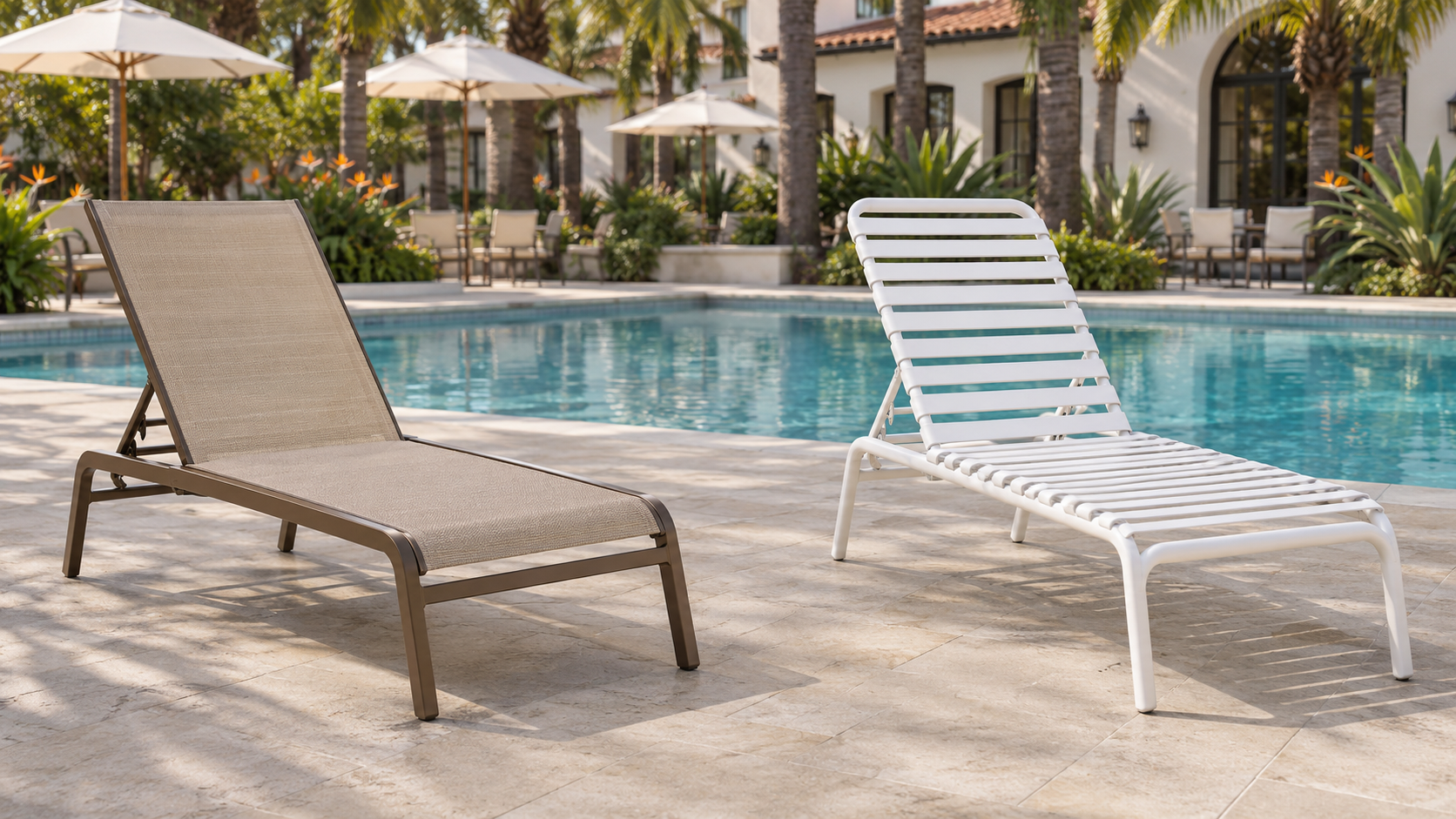
For hotels, HOA communities, apartment properties, and country clubs, sling and vinyl strap furniture are two options worth comparing. Both can work well in commercial settings. The better choice depends on the specific furniture, how your pool area operates, and your plans for maintaining it.
Sling furniture uses a tensioned fabric seating surface, while strap furniture supports the user with individual vinyl bands. That difference influences comfort, cleaning, appearance, and repair options.
What Is Sling Pool Furniture?
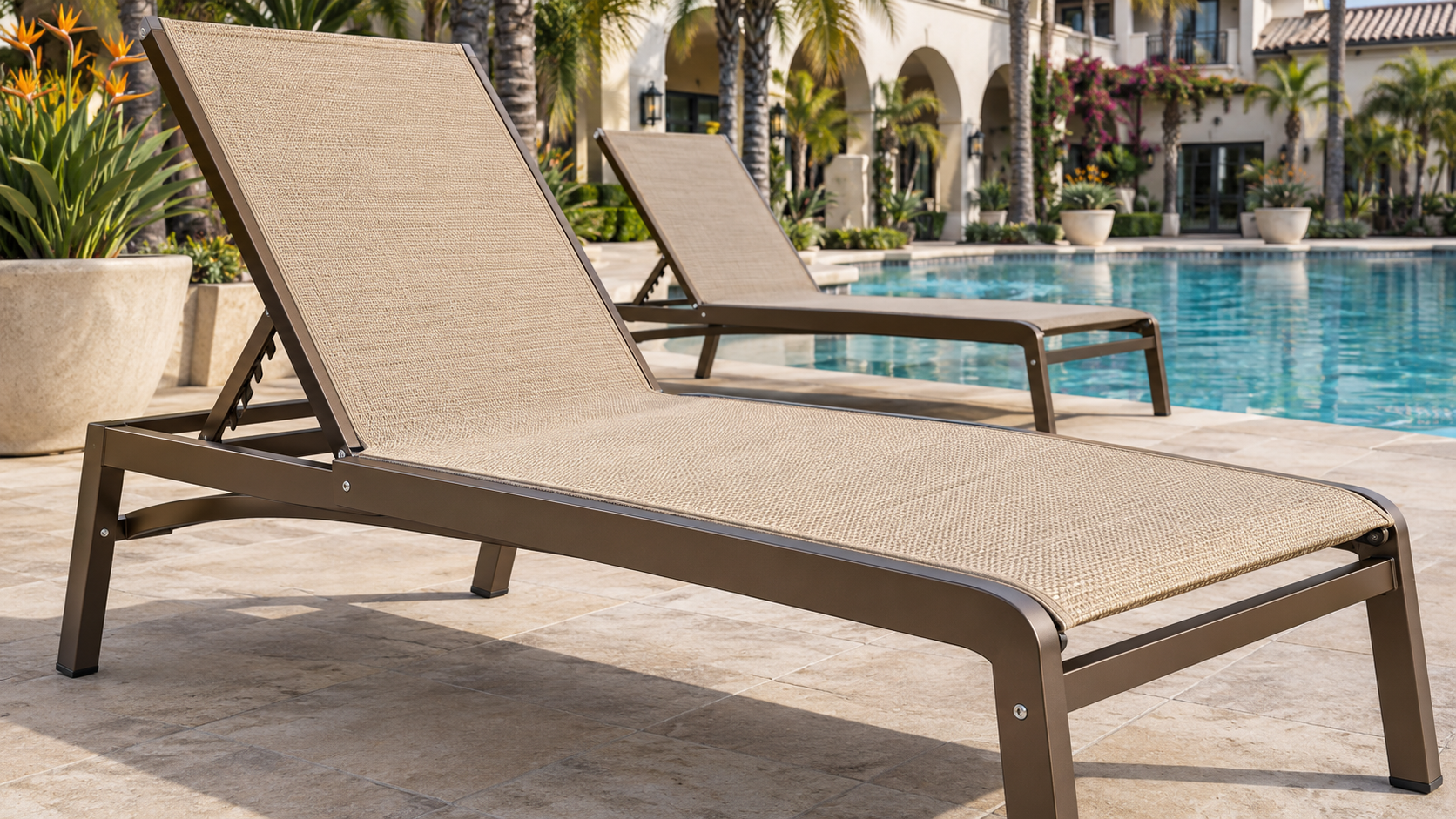
Sling seating creates a continuous fabric surface across the furniture frame.
Sling furniture has fabric stretched between the sides of its frame to form the seat and back. Depending on the design, these may be separate panels or part of a larger continuous surface.
For property managers, the appeal is a streamlined appearance and supportive seating without loose cushions to collect, reposition, or store. Fabric colors and textures also offer ways to coordinate furniture with the surrounding pool deck.
When evaluating a collection, sit in a sample and compare the support, seat height, and reclining positions. The shape of the frame and the tension of the fabric matter just as much as the material’s appearance.
What Is Vinyl Strap Pool Furniture?
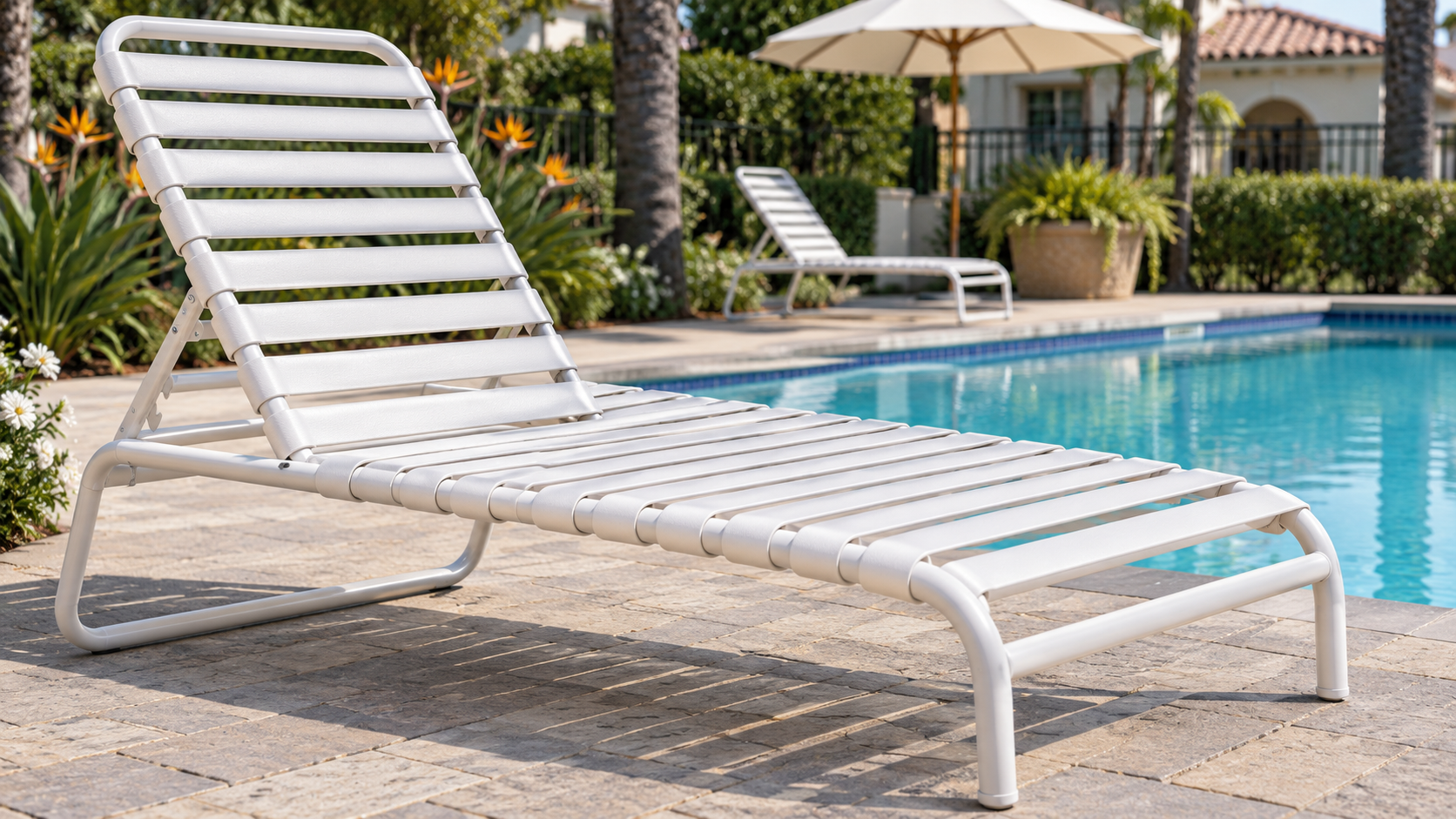
Vinyl strap furniture uses individual bands arranged across or woven around the frame.
Strap furniture uses individual vinyl bands to create its seating surface. Some designs feature parallel straps with open spaces between them; others use an overlapping or woven pattern.
This construction gives strap seating its familiar poolside appearance. Color choices can create a uniform look across a property or introduce accents that complement umbrellas and other outdoor furnishings.
As with sling furniture, comfort varies by model. Strap spacing, tension, frame shape, and the condition of the vinyl all affect how the furniture feels.
Sling vs. Strap: What Should You Compare?
| Consideration | Sling furniture | Vinyl strap furniture |
|---|---|---|
| Seating surface | Continuous tensioned fabric | Individual vinyl bands |
| Appearance | Smooth fabric panels with color and texture options | Defined strap pattern with solid-color or coordinated combinations |
| Comfort | Depends on fabric tension, contour, and frame design | Depends on strap tension, spacing, and frame design |
| Cleaning attention | Fabric surface, edges, and attachment areas | Strap surfaces, undersides, and overlapping sections |
| Signs of wear | Sagging, tears, fraying, or separation at edges | Cracking, stretching, loose attachments, or broken straps |
| Restoration | Replacement sling panels fitted to compatible frames | Replacement straps fitted and secured to compatible frames |
| Stacking and storage | Confirm for the exact model | Confirm for the exact model |
Neither seating type automatically guarantees better durability, easier handling, or a longer lifespan. Compare the complete product and its suitability for commercial use.
1. Compare Comfort in the Way Guests Actually Use It
A chair that feels comfortable for a few minutes may feel different during an afternoon by the pool.
For chaise lounges, test the recline mechanism and support in several positions. For upright seating, consider seat height, arm placement, and how easily someone can sit down and stand up.
Sling seating provides a continuous surface, while strap seating has a more segmented feel. Personal preference plays a role, so a physical sample is more useful than choosing solely from photographs.
Also consider whether the furniture will normally be used with a towel or cushion. If cushions are part of the plan, include their cleaning, storage, and replacement needs in the comparison.
A useful purchasing step: Have both your property team and maintenance staff evaluate a sample before approving a large order.
2. Understand the Cleaning Requirements
Pool furniture needs regular attention to remove dirt, spills, and sunscreen residue. Neither sling nor strap seating is maintenance-free.
Follow the manufacturer’s instructions for the exact fabric, vinyl, and frame finish. Tropitone’s care guidance recommends mild soap, water, and a sponge or soft-bristle brush for routine cleaning of its fabrics and vinyl straps, followed by thorough rinsing. It also calls out the need to clean beneath overlapping straps and warns that certain sunscreen products can discolor both materials. tropitone.com
For your maintenance team, the practical comparison is access:
- With sling furniture, consider how easily staff can clean the fabric, seams, and edges.
- With strap furniture, look at the undersides, attachment points, and any woven intersections.
Ask for care instructions before ordering. Your team should know which products are approved rather than assuming the same cleaner works on every surface.
3. Look Beyond the Seating Material
A new sling or fresh set of straps cannot compensate for a damaged frame.
When comparing furniture, examine the joints, feet, hardware, and reclining mechanisms. Confirm that the manufacturer approves the specific model for your intended commercial use, and review the applicable warranty.
Handling deserves equal attention. If staff move furniture daily, ask about weight, stacking limits, and the recommended way to transport it. Do not assume that every sling chaise stacks or that every strap chair is easy to move.
For existing inventory, make frame condition part of routine inspections. Loose hardware, unstable legs, and malfunctioning adjustment mechanisms should be addressed before the furniture returns to use.
4. Plan for Repairs Before You Need Them
Replacement seating materials can extend the usefulness of furniture with serviceable frames.
Repairability is an important part of the purchasing decision, particularly when a property owns dozens of matching pieces.
For sling furniture, ask whether replacement panels can be made or ordered for the exact model. Proper dimensions and installation are essential to achieving the intended fit.
For strap furniture, ask whether isolated damage can be repaired or whether the condition of the remaining vinyl makes complete restrapping more appropriate. Replacing one strap may not resolve a broader problem with aged or stretched material.
Patio Guys offers both sling replacement and vinyl strap replacement, with options to combine seating replacement with powder coat refinishing.
Before approving a repair project, request an assessment of the frames and a clear scope of work. Separate furniture that needs seating materials from pieces that also require finish restoration or replacement.
5. Compare Total Project Cost
It is tempting to choose based on the price per chair. For a commercial property, the more useful comparison is what it costs to furnish and maintain the entire area.
Ask suppliers to quote the same quantities and include delivery, assembly, placement, and any removal services you need. Then compare repair options and the work required from your staff.
For an existing pool deck, request separate pricing for:
- Replacing worn slings or straps.
- Restoring frames and replacing seating materials.
- Purchasing new furniture where restoration is unsuitable.
Avoid assuming that strap is always cheaper or that sling will always last longer. Product quality, condition, labor, and project scope can change the economics.
Timing matters, too. Ask whether work can be completed in phases so that the property retains enough usable seating during the project.
Which Option Fits Your Property?
Consider sling furniture when your team prefers a continuous fabric seating surface and wants to coordinate colors and textures across the pool area. Test the comfort and confirm future replacement options.
Consider strap furniture when the defined strap appearance suits the property and your maintenance team is comfortable caring for the design. Evaluate strap spacing and support in person.
Consider restoring your current furniture when the layout still works and the frames remain suitable for continued use. Changing worn seating materials may address the problem without replacing the entire inventory.
You can also use different seating types in different areas. The important part is making each choice intentional and keeping maintenance requirements manageable.
Make a Plan for Your Pool Furniture
The best decision starts with your property’s daily needs: comfortable seating, a consistent appearance, practical maintenance, and a clear path for repairs.
Whether you are comparing new furniture or evaluating an existing pool deck, Patio Guys can help you explore sling replacement, vinyl strap replacement, and refinishing options.